
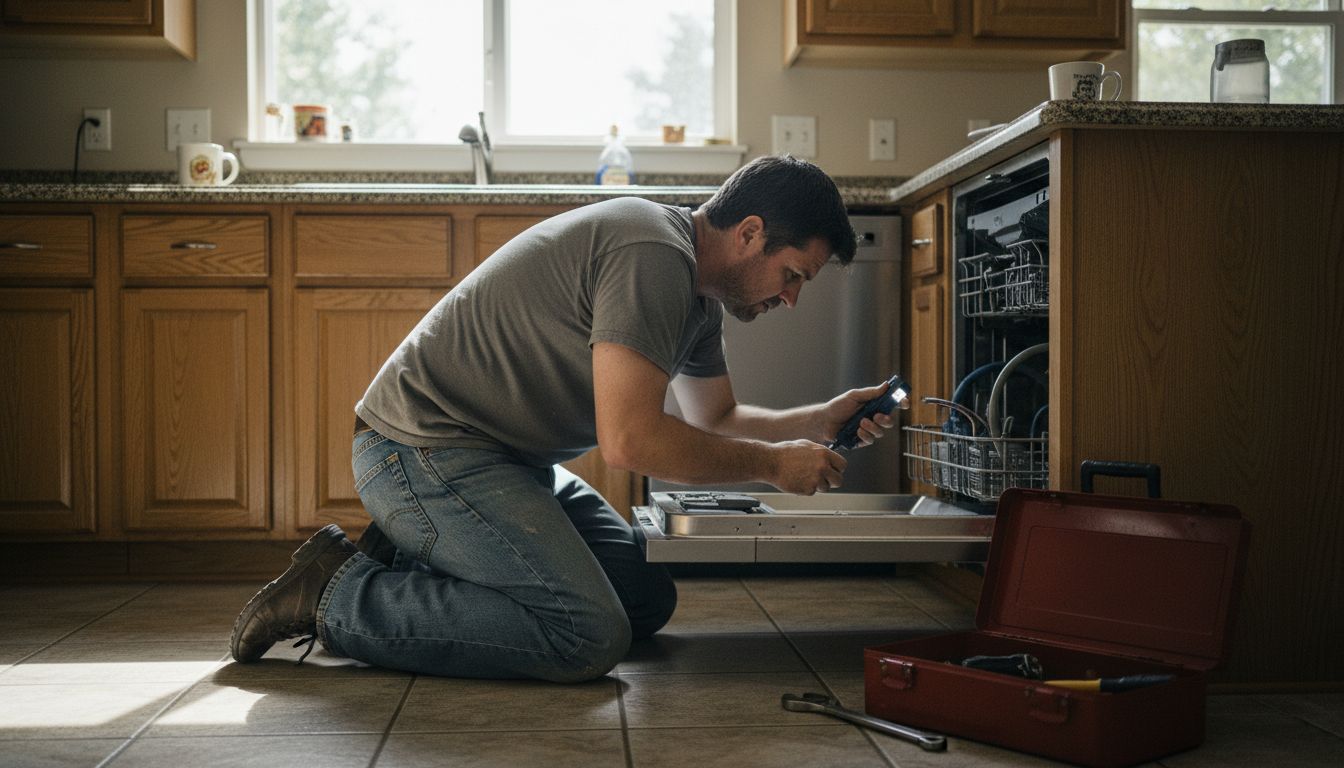
Most American homes rely on dishwashers for daily convenience, yet nearly 20 percent experience at least one significant breakdown each year. When your appliance shows signs of trouble, quick action can prevent expensive repairs and water damage. This guide offers practical, step by step solutions so you can keep your kitchen running smoothly and avoid the stress of a malfunctioning dishwasher.
Table of Contents
- Turn Off Power and Water Supply Safely
- Inspect and Clean the Dishwasher Filter
- Check Spray Arms for Blockages
- Examine Door Gasket for Leaks
- Test and Reset the Dishwasher Control Panel
- Assess Hoses and Connections for Leaks
- Know When to Call a Professional Technician
Quick Summary
| Key Message | Explanation |
|---|---|
| 1. Safely disconnect power and water before repairs | Always turn off the circuit breaker and main water valve to avoid electrical shocks and water damage. |
| 2. Clean your dishwasher filter monthly | Regular filter maintenance prevents odors and improves cleaning efficiency by removing trapped food particles. |
| 3. Inspect spray arms for blockages | Ensure spray arms are clear of debris to maintain proper water flow and effective cleaning of dishes. |
| 4. Check door gasket for leaks | Regularly examine the door seal for damage or mold to prevent water from escaping during wash cycles. |
| 5. Call a professional for complex issues | If problems persist after basic checks, seek expert help for mechanical and electrical issues beyond DIY repairs. |
1. Turn Off Power and Water Supply Safely
Before starting any dishwasher repair, your first critical step is safely disconnecting electricity and water sources. This precautionary measure protects you from potential electrical shocks and prevents unexpected water damage during the repair process.
Power disconnection requires careful attention. Locate your home’s main electrical panel, typically found in a utility room, garage, or basement. Open the panel and identify the circuit breaker controlling your dishwasher. Carefully switch this specific breaker to the “off” position to eliminate electrical risk.
For water supply, you will need to stop water flow to prevent potential leaks or flooding. Find your home’s main water valve, which is often situated near the water meter close to the street or in your home’s foundation area. Turn this valve clockwise until it stops to completely shut off water entering your home.
Pro Tips for Safe Utility Shutdown:
• Wear rubber soled shoes for electrical safety
• Use a flashlight if the panel area is dark
• Test the circuit is off by attempting to run the dishwasher
• Keep the main valve wrench nearby for quick water shutoff
By taking these systematic steps, you create a secure environment for appliance repair while protecting yourself from potential electrical or water related accidents.
2. Inspect and Clean the Dishwasher Filter
Your dishwasher’s filter plays a critical role in maintaining optimal cleaning performance and preventing unpleasant odors. Most homeowners overlook this small but essential component, which traps food particles and debris during each wash cycle.
Located typically under the spray arms, the filter requires regular maintenance to function effectively. Dishwasher filters accumulate food remnants that can cause reduced cleaning efficiency and potential odor problems if left unchecked.
Cleaning Process:
• Remove the bottom dish rack to access the filter
• Twist and lift the filter counterclockwise to detach
• Rinse thoroughly under warm running water
• Use a soft brush to gently remove stubborn debris
• Inspect for any cracks or damage
Consumer Reports recommends cleaning your dishwasher filter monthly to maintain peak performance. A clean filter ensures your dishes emerge sparkling and prevents potential mechanical issues caused by accumulated food particles.
Pro tip: If you notice persistent odors or decreased cleaning effectiveness, a thorough filter cleaning might be the simple solution you need.
3. Check Spray Arms for Blockages
Spray arms are the unsung heroes of your dishwasher, responsible for distributing water evenly across your dishes. When these critical components become blocked, your entire cleaning process can grind to a halt, leaving you with dirty dishes and potential long term appliance damage.
Why Spray Arms Matter:
These rotating mechanisms shoot water at high pressure to remove food particles and grime. Dishwasher troubleshooting often begins with examining these components for potential issues.
Inspection and Cleaning Steps:
• Remove the spray arms carefully
• Rinse thoroughly under running water
• Use a toothpick or wooden skewer to clear blocked holes
• Check for any visible cracks or damage
• Ensure all spray holes are completely open
Consumer Reports recommends periodic inspection to prevent buildup that can compromise your dishwasher’s performance. Small blockages from food debris can significantly reduce water flow, resulting in poorly cleaned dishes and increased strain on your appliance.
A quick monthly maintenance check can save you from costly repairs and ensure your dishwasher continues running smoothly. Pay special attention to smaller holes that are most likely to trap minute food particles and mineral deposits.
4. Examine Door Gasket for Leaks
The door gasket on your dishwasher is a critical seal that prevents water from escaping during the wash cycle. This rubber or silicone lining creates a watertight barrier between the dishwasher door and the internal compartment, making it essential for preventing potential water damage to your kitchen floor.
What to Look For:
• Visible cracks or tears in the rubber seal
• Discoloration or mold growth
• Signs of brittleness or hardening
• Gaps when the door is closed
Common appliance problems often start with compromised door seals that go unnoticed. Consumer Reports highlights the importance of regular gasket maintenance to prevent mold buildup and potential leaks.
Cleaning the gasket is straightforward. Use a soft damp cloth to wipe down the entire seal, paying special attention to corners and crevices where moisture and food particles can accumulate. For stubborn grime, a mild soap solution works effectively. If you notice significant wear or persistent mold growth, consider replacing the gasket to maintain your dishwasher’s optimal performance and prevent water damage.
Pro tip: Perform this inspection monthly to catch potential issues before they become costly repairs.
5. Test and Reset the Dishwasher Control Panel
Electronic glitches can transform your reliable dishwasher into a frustrating appliance, causing unexpected shutdowns or performance issues. Understanding how to properly test and reset the control panel can save you time and potentially avoid expensive repair calls.
Reset Procedures:
• Unplug the dishwasher or turn off the circuit breaker
• Wait 3 to 5 minutes to fully discharge electronic systems
• Restore power and observe control panel response
• Check for error codes or unusual display behavior
Emergency appliance repair tips recommend a systematic approach to troubleshooting electronic malfunctions. Kitchen Institute suggests that a simple power reset can resolve many minor electronic interruptions.
If your control panel remains unresponsive after a reset, look for specific error codes in your user manual. Some models display unique diagnostic information that can pinpoint the exact system malfunction. Remember that persistent electronic issues might indicate a more serious problem requiring professional diagnostic services.
6. Assess Hoses and Connections for Leaks
Your dishwasher’s hoses are its circulatory system, quietly transporting water in and out of the appliance. A small leak or loose connection can quickly escalate from a minor inconvenience to a major water damage disaster in your kitchen.
Critical Areas to Inspect:
• Drain hose connection points
• Water inlet valve connections
• Visible rubber seals and gaskets
• Signs of corrosion or wear
Emergency appliance repair tips emphasize the importance of proactive maintenance. Consumer Reports recommends regular visual inspections to catch potential issues before they become costly repairs.
While examining hoses, look for telltale signs of wear such as small cracks, mineral buildup, or slight discoloration. Pay special attention to areas where hoses connect to the appliance or wall, as these junctures are most prone to developing leaks. If you notice any moisture or suspect a potential leak, tighten connections or consider replacing the hose to prevent water damage to your kitchen flooring and cabinets.
Pro tip: Run your fingers along hose connections during inspection to feel for any dampness that might not be immediately visible.
7. Know When to Call a Professional Technician
Despite your best repair efforts, some dishwasher problems require specialized expertise that goes beyond home maintenance skills. Recognizing the boundary between DIY repairs and professional intervention can save you time, money, and potential further damage to your appliance.
Warning Signs Requiring Professional Help:
• Persistent water leaks after seal and hose inspection
• Unusual grinding or loud mechanical noises
• Complete failure of electronic control panel
• Recurring drainage problems
• Visible electrical component damage
Local appliance service professionals possess diagnostic tools and technical training to address complex mechanical and electrical issues. Consumer Reports suggests contacting an expert when routine maintenance fails to resolve performance problems.
Professional technicians can quickly identify underlying issues that might not be apparent to the average homeowner. They bring specialized equipment and manufacturer specific knowledge that can diagnose problems accurately and implement precise repairs. If your dishwasher continues to malfunction after completing all previous repair checklist steps, it is time to trust a certified professional to resolve the problem.
Pro tip: Always choose a certified technician with specific experience in your dishwasher brand and model for the most reliable service.
This table summarizes the key steps and considerations for dishwasher maintenance and repair as discussed in the article.
| Main Step | Key Points & Actions | Benefits/Outcomes |
|---|---|---|
| Turn Off Power and Water Supply Safely | Disconnect electricity via circuit breaker; shut off main water valve. | Prevents electrical shocks and water damage. |
| Inspect and Clean the Dishwasher Filter | Remove and rinse filter; use a soft brush for debris. | Maintains cleaning performance and prevents odors. |
| Check Spray Arms for Blockages | Remove arms, rinse, and clear holes using a toothpick. | Ensures clean dishes and prevents appliance damage. |
| Examine Door Gasket for Leaks | Look for cracks, mold; clean with a damp cloth. | Prevents water leaks and mold growth. |
| Test and Reset the Dishwasher Control Panel | Unplug, wait, and restore power; check for error codes. | Resolves minor electronic glitches. |
| Assess Hoses and Connections for Leaks | Inspect hose connections for cracks and wear; tighten as necessary. | Prevents potential water damage. |
| Know When to Call a Professional Technician | Recognize persistent issues such as leaks or electronic failures. | Saves time and money on complex repairs. |
Expert Dishwasher Repair Solutions for Marlboro and Monmouth County Residents
Facing issues like leaks from worn door gaskets or electronic control panel glitches can be frustrating and even risky. This article’s dishwasher repair checklist highlighted common pain points such as safely turning off power and water sources, cleaning clogged spray arms and filters, and knowing when to call for professional help. Avoid the stress of sudden appliance failures by trusting experts who understand these challenges firsthand.

At Expert Appliance Repair, we specialize in fast, reliable dishwasher repairs throughout Marlboro, NJ, and surrounding Monmouth County areas. Our family-owned business, established in 1988, offers 24/7 emergency support and upfront pricing so you get the service you deserve without surprises. Whether the issue is a leaking hose or a faulty control panel, our certified technicians deliver lasting solutions. Explore our full range of Appliance Archives for tips and services or contact us today at Expert Appliance Repair to schedule your same-day service and keep your kitchen running smoothly.
Frequently Asked Questions
How do I safely turn off the power and water supply to my dishwasher before starting repairs?
To safely turn off the power, locate your main electrical panel and switch off the circuit breaker for the dishwasher. Next, find your home’s main water valve and turn it clockwise until it stops to prevent any leaks or flooding during repairs.
What steps should I take to clean my dishwasher filter effectively?
To clean your dishwasher filter, remove the bottom dish rack and detach the filter by twisting it counterclockwise. Rinse it under warm water to remove food particles, using a soft brush for any stubborn debris, and check for cracks or damage.
How can I check and clear blockages in the spray arms of my dishwasher?
To check for blockages in the spray arms, carefully remove them and rinse them under running water. Use a toothpick or wooden skewer to clear any blocked holes, ensuring all spray holes are open to maintain optimal water flow during cycles.
What signs indicate that my dishwasher’s door gasket needs inspection or replacement?
Inspect the door gasket for visible cracks, discoloration, or mold growth, as well as any gaps when the door is closed. If significant wear is present, consider cleaning it with a damp cloth or replace it to prevent leaks and water damage.
How do I perform a reset on my dishwasher’s control panel?
To reset your dishwasher’s control panel, unplug the appliance or turn off the circuit breaker, and wait 3 to 5 minutes. After restoring power, observe the control panel for any error codes or unusual behavior to determine if further action is needed.
When should I consider calling a professional technician for dishwasher repairs?
You should call a professional technician if you notice persistent water leaks, unusual noises, or if the electronic control panel is unresponsive after a reset. Professionals can accurately diagnose issues beyond the scope of typical maintenance and provide effective solutions.
Recommended
- 7 Essential Dishwasher Troubleshooting Steps for Quick Fixes – Expert Appliance
- Washing Machine Repair Workflow for Fast, Reliable Service – Expert Appliance
- Complete Guide to Common Washing Machine Issues – Expert Appliance
- 7 Essential Emergency Appliance Repair Tips for Homeowners – Expert Appliance
- How to Minimize Downtime: Efficient Diesel Injection Repairs – My WordPress